




Executive Summary
A growing body of scientific evidence demonstrates that aerobic exercise can effectively slow, and in some cases reverse, aspects of brain aging. This report synthesizes key findings from randomized controlled trials (RCTs) and reviews, focusing on structural brain changes, cognitive improvements, and potential mechanisms. Studies show that consistent moderate-to-vigorous aerobic activities—such as jogging, cycling, or brisk walking—can reduce markers of brain age, increase hippocampal volume, and enhance memory and thinking skills. These benefits appear accessible even in midlife and later years, offering a low-cost, non-pharmaceutical strategy for promoting brain health. While the exact biological pathways remain partially elusive, the cumulative data underscores exercise as a potent tool for neuroprotection.
Introduction: The Aging Brain and Exercise’s Role
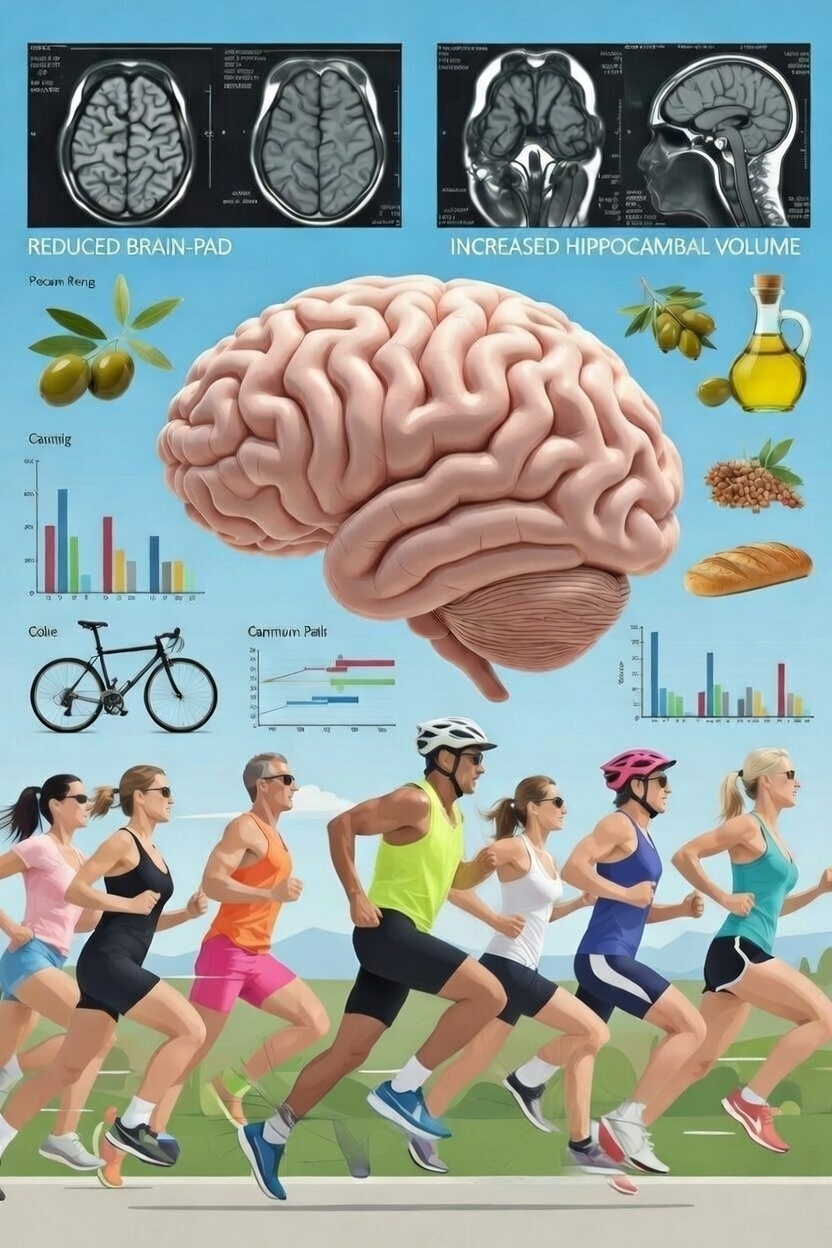
As humans age, the brain undergoes natural changes, including shrinkage in key regions like the hippocampus (critical for memory), reduced neuroplasticity, and increased risk of cognitive decline. Chronological age often correlates with “brain age,” a metric derived from MRI scans that predicts biological aging based on structural features. A positive brain-predicted age difference (brain-PAD) indicates an “older” brain relative to one’s actual age, while a reduction suggests rejuvenation.
Research increasingly points to lifestyle factors, particularly aerobic exercise, as modifiable influencers of brain aging. Aerobic exercise elevates heart rate and oxygen delivery, potentially triggering neurotrophic factors, reducing inflammation, and improving vascular health. This report details landmark studies, highlighting how exercise can make the brain appear and function younger.
Key Studies on Aerobic Exercise and Brain Rejuvenation
Midlife Exercise Intervention: Reversing Brain Age in 12 Months
A pivotal 2025 RCT involving 130 adults (average age 41) examined the impact of a 12-month aerobic exercise program adhering to guidelines of at least 150 minutes of moderate-to-vigorous activity per week. Participants in the exercise group experienced a significant reduction in brain-PAD by approximately 0.6 years, meaning their brains appeared structurally younger on MRI scans compared to baseline. The control group, maintaining usual activity levels, showed a slight increase in brain-PAD (0.35 years older). Notably, higher baseline cardiorespiratory fitness (measured by VO2 peak) correlated with a younger brain-PAD, and the intervention improved fitness by 1.6 mL/kg/min in the exercise group.
Intriguingly, the brain benefits were independent of changes in fitness, body composition, blood pressure, or levels of brain-derived neurotrophic factor (BDNF), a protein linked to neuron growth. This suggests unidentified mechanisms at play, such as subtle vascular improvements or anti-inflammatory effects. Lead researcher Lu Wan emphasized that “a simple, guideline-based exercise program can make the brain look measurably younger over just 12 months.” This study is groundbreaking as it targets midlife adults, indicating early intervention could prevent later cognitive issues.
Hippocampal Growth in Older Adults: The 2011 Landmark Trial
An earlier RCT from 2011 with 120 sedentary older adults (average age 67) provided foundational evidence. After one year of aerobic exercise (three sessions per week, building to 40 minutes at moderate intensity), participants saw a 2% increase in anterior hippocampal volume, equivalent to reversing 1-2 years of typical age-related shrinkage. This structural change correlated with improved spatial memory performance. In contrast, the control group (engaged in stretching only) experienced a 1.4% hippocampal decline.
The study highlighted exercise’s specificity: volumes in other brain regions like the caudate nucleus and thalamus remained unchanged, underscoring the hippocampus’s sensitivity to aerobic activity. These findings established that even in late adulthood, moderate exercise can counteract brain atrophy, with implications for reducing dementia risk.
Comprehensive Lifestyle Interventions: Beyond Exercise Alone
While exercise is potent, combining it with other factors amplifies benefits. A large 2025 study of over 2,100 adults aged 60-79 tested a two-year multifaceted program including aerobic exercise (four times weekly), a Mediterranean diet, cognitive training, social activities, and vascular risk monitoring. Participants in the intensive group showed significant improvements in memory, thinking, and overall cognitive function, effectively reducing age-related declines compared to a self-guided control group.
This holistic approach suggests synergistic effects: exercise may enhance nutrient delivery from diet, while social and cognitive elements reinforce neural pathways. The study provides “the strongest evidence yet” for lifestyle modifications enhancing brain health in later life.
Mechanisms and Broader Insights
A 2025 review explores neuroprotective mechanisms, emphasizing cardiorespiratory fitness (CRF) as a key mediator. Endurance exercise boosts CRF, which promotes neurogenesis, reduces oxidative stress, and modulates inflammation. However, as seen in the midlife RCT, not all benefits are CRF-dependent, pointing to direct effects on brain vasculature or epigenetics.
Overall, these studies indicate dose-response relationships: more consistent, moderate-intensity exercise yields greater brain youthfulness. Limitations include short durations (most 1-2 years) and reliance on MRI proxies rather than long-term dementia outcomes. Future research should clarify mechanisms and optimal protocols.
Conclusion: Implications for Public Health
Aerobic exercise emerges as a accessible strategy to foster a biologically younger brain, potentially delaying cognitive decline and improving quality of life. Starting in midlife or later can yield measurable benefits, with even guideline-level activity (150 minutes weekly) proving effective. Individuals should consult healthcare providers before beginning regimens, especially if sedentary. As populations age, promoting exercise could reduce healthcare burdens associated with neurodegeneration.
References
- Fitness and exercise effects on brain age: A randomized clinical trial – https://www.sciencedirect.com/science/article/pii/S2095254625000602
- Can Exercise Turn Back the Clock on Your Brain? New Study Says … – https://www.adventhealth.com/institute/adventhealth-research-institute/news/can-exercise-turn-back-clock-your-brain-new-study-says-yes
- Regular aerobic exercise may slow brain aging in midlife, study finds – https://www.msn.com/en-us/health/other/regular-aerobic-exercise-may-slow-brain-aging-in-midlife-study-finds/ar-AA1UlOGn
- Fitness and Exercise Effects on Brain Age: A Randomized Clinical … – https://pmc.ncbi.nlm.nih.gov/articles/PMC11888500
- Study finds a simple path to stronger memory and a younger brain – https://www.earth.com/news/study-finds-simple-exercise-path-to-stronger-memory-biologically-younger-brain
- Big study finds lifestyle changes after age 60 can enhance brain health – https://www.npr.org/2025/07/28/nx-s1-5477556/aging-brain-health-lifestyle-diet-exercise-social-alzheimers
- Neuroprotective mechanisms of exercise and the … – The Lancet – https://www.thelancet.com/journals/lancet/article/PIIS0140-6736(25)00184-9/abstract
- Exercise training increases size of hippocampus and improves … – https://www.pnas.org/doi/10.1073/pnas.1015950108
- Aerobic Exercise Makes The Brain Younger, Scientists Just Can’t … – https://studyfinds.org/aerobic-exercise-brain-younger

REPORT | “Pollution Isn’t Patriotic”
“Pollution Isn’t Patriotic”: American Rivers Mobilizes for Clean Water as a National Priority In January 2025, the conservation organization American…




Leave a Reply