

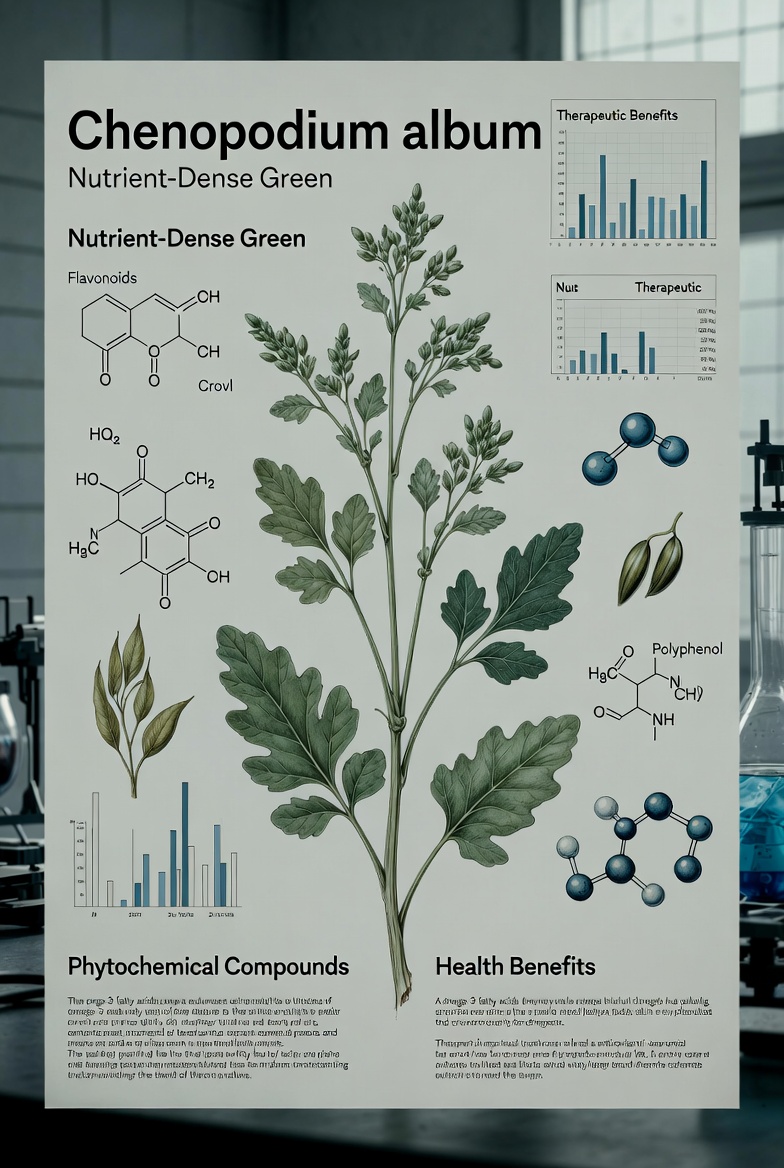



Lamb’s Quarters: The Weed That’s Winning the Superfood RaceLamb’s quarters, scientifically known as Chenopodium album, is a versatile wild edible plant often dismissed as a common weed. Also called bathua, wild spinach, or goosefoot, it thrives worldwide and has been used traditionally in various cuisines and medicines. Recent studies from 2023 to 2025 highlight its exceptional nutritional profile, rich phytochemical content, and promising therapeutic applications, positioning it as an underexplored resource for human health, livestock feed, and even pharmaceutical development.
Nutritional Profile
Lamb’s quarters stands out for its high nutrient density, often surpassing conventional crops like spinach or wheat. The leaves and shoots are packed with proteins (averaging 4.2 g/100 g in raw leaves, up to 32.2 g/100 g in some analyses, and 28-47 g/kg in grains), carbohydrates (7.3 g/100 g raw), dietary fibers (4 g/100 g raw), and essential fatty acids, including omega-3, -6, and -9 varieties. It provides a balanced array of amino acids, such as lysine (6-10.11 g/100 g protein), methionine (2.3 g/100 g), cysteine (1.2 g/100 g), and leucine (13.44 g/kg). Vitamins are abundant, including vitamin A (78-129 mg/kg, retinol 11,600 IU/100 g), vitamin C (1.9-2.3 g/kg or 80 mg/100 g), vitamin E, beta-carotene (0.19-5.91 mg/100 g fresh weight), niacin (1.2 mg/100 g), and traces of thiamine, riboflavin, pantothenic acid, pyridoxal, and folate (30 µg/100 g). Minerals like calcium (309 mg/100 g), magnesium (34 mg/100 g), potassium (452 mg/100 g), iron (1.2-2.78 mg/100 g), phosphorus (72 mg/100 g), sodium (43 mg/100 g), and traces of selenium, copper, manganese, and zinc further enhance its value. The plant is gluten-free and offers superior nutrition compared to staples like rice or maize, making it ideal for addressing deficiencies, such as vitamin A shortage.
| Nutrient Category | Key Components | Amount (per 100 g raw unless specified) |
|---|---|---|
| Proteins | High-quality with essential amino acids | 4.2-32.2 g |
| Carbohydrates | Energy source | 7.3 g |
| Fibers | Dietary fiber | 4 g |
| Vitamins | Vitamin A, C, E, beta-carotene | Vitamin C: 80 mg; Beta-carotene: 0.19-5.91 mg |
| Minerals | Calcium, iron, potassium | Calcium: 309 mg; Iron: 1.2 mg; Potassium: 452 mg |
Processing methods like cooking, germination, or roasting can improve bioavailability (e.g., 32-33% for calcium) while reducing anti-nutrients like oxalates and phytates.
Phytochemical Composition
The therapeutic prowess of lamb’s quarters stems from its diverse phytochemicals. These include alkaloids (e.g., trigonelline, chenopodine, chenoalbicin), flavonoids (e.g., kaempferol 3-O-β-glucoside or astragalin, quercetin 7.335 mg/g, rutin, hesperidin, apigetrin, apigenin, luteolin), isoflavonoids, glycosides (flavonoid and triterpene types), lignans, terpenes, sterols, polyphenols (224.99-304.98 mg GAE/100 g), phenols (protocatechuic acid), saponins (0.027-0.867 g/100 g), tannins (152.49-203.91 mg GAE/100 g), carotenoids (lutein 11.7-185 mg/100 g dry weight, provitamin A 120 mg/100 g dry weight), essential oils (yield 0.466-0.64% v/w, with ascaridole 15.5%, p-cymene 40.9%), and fatty acid esters. Different plant parts contribute uniquely: leaves and aerial parts have phenolics and essential oils; roots contain alkaloids and saponins; seeds offer lipids, lectins, and tropolone derivatives. Anti-nutrients like phytic acid (238.3-268.33 mg/100 g), oxalates (394.19-477.08 mg/100 g), and trypsin inhibitors (0.11-0.17 TIU/mg) are present but manageable through preparation.
Recent Studies and Health BenefitsRecent research (2023-2025) underscores lamb’s quarters’ multifaceted health benefits, driven by its bioactive compounds. A 2025 review highlights its antioxidant properties via enzymes like APX and SOD, and compounds like astragalin, which also confer anti-inflammatory, antiviral (anti-HIV), anticancer (against Ehrlich ascites carcinoma, 30.6-41.8% inhibition), hepatoprotective (against CCl4 toxicity), anti-obesity, anthelmintic, antidiabetic, antiallergic, antimicrobial (antibacterial, antifungal, anticandidal), antiacne, and nephroprotective effects. Another 2025 study emphasizes its role in human and livestock health, noting anti-inflammatory, gastroprotective, antibacterial, analgesic, hepatoprotective, anthelmintic, antioxidant, and insecticidal activities. It aids diabetes management through polyphenols and alkaloids, and traditional uses include treating rheumatism, diarrhea, arthritis, burns, indigestion, and liver disorders. A 2023 compilation reports antidiabetic effects (α-amylase inhibition IC50 122.18 µg/mL, blood glucose reduction in rats), anti-inflammatory (64% edema inhibition via NF-κB), antimicrobial (MIC 0.31-1.25 mg/mL against E. coli, S. aureus), antioxidant (96% DPPH inhibition), hepatoprotective (restores ALT/AST in damaged livers), analgesic, diuretic, anti-ulcer, antihyperlipidemic (normalizes cholesterol), and antiproliferative (against breast cancer cells via apoptosis). Ethnomedicinal applications cover jaundice, kidney stones, and as a blood purifier. These studies position lamb’s quarters for precision diets, sustainable feeding, and pharmaceuticals, with epigenetic and microbiome-modulating potential.
Potential Risks and Considerations
While beneficial, lamb’s quarters contains oxalates and saponins, which may interfere with mineral absorption or cause issues like kidney stones if consumed excessively. Proper cooking mitigates these. Foraging requires accurate identification to avoid toxic look-alikes.
Lamb’s quarters is emerging as a powerhouse wild edible, backed by recent studies affirming its nutritional superiority and therapeutic versatility. As research advances into 2026, it could revolutionize functional foods and natural remedies, urging greater exploration and sustainable utilization.
Citations
- Kumari, A., et al. (2025). Exploring the phytochemistry and therapeutic potential of Chenopodium album L: A land to lab concept. Next Research. https://www.sciencedirect.com/science/article/abs/pii/S3050475925011182
- Abd El-Hack, M.E., et al. (2025). Nutritional value and therapeutic applications of Chenopodium album for human and livestock health: A comprehensive review. Livestock Science. https://www.sciencedirect.com/science/article/abs/pii/S2212429225008004
- Singh, S., et al. (2023). A Compiled Update on Nutrition, Phytochemicals, Processing Effects, Analytical Testing and Health Effects of Chenopodium album: A Non-Conventional Edible Plant (NCEP). Molecules. https://www.mdpi.com/1420-3049/28/13/4902
Leave a Reply