

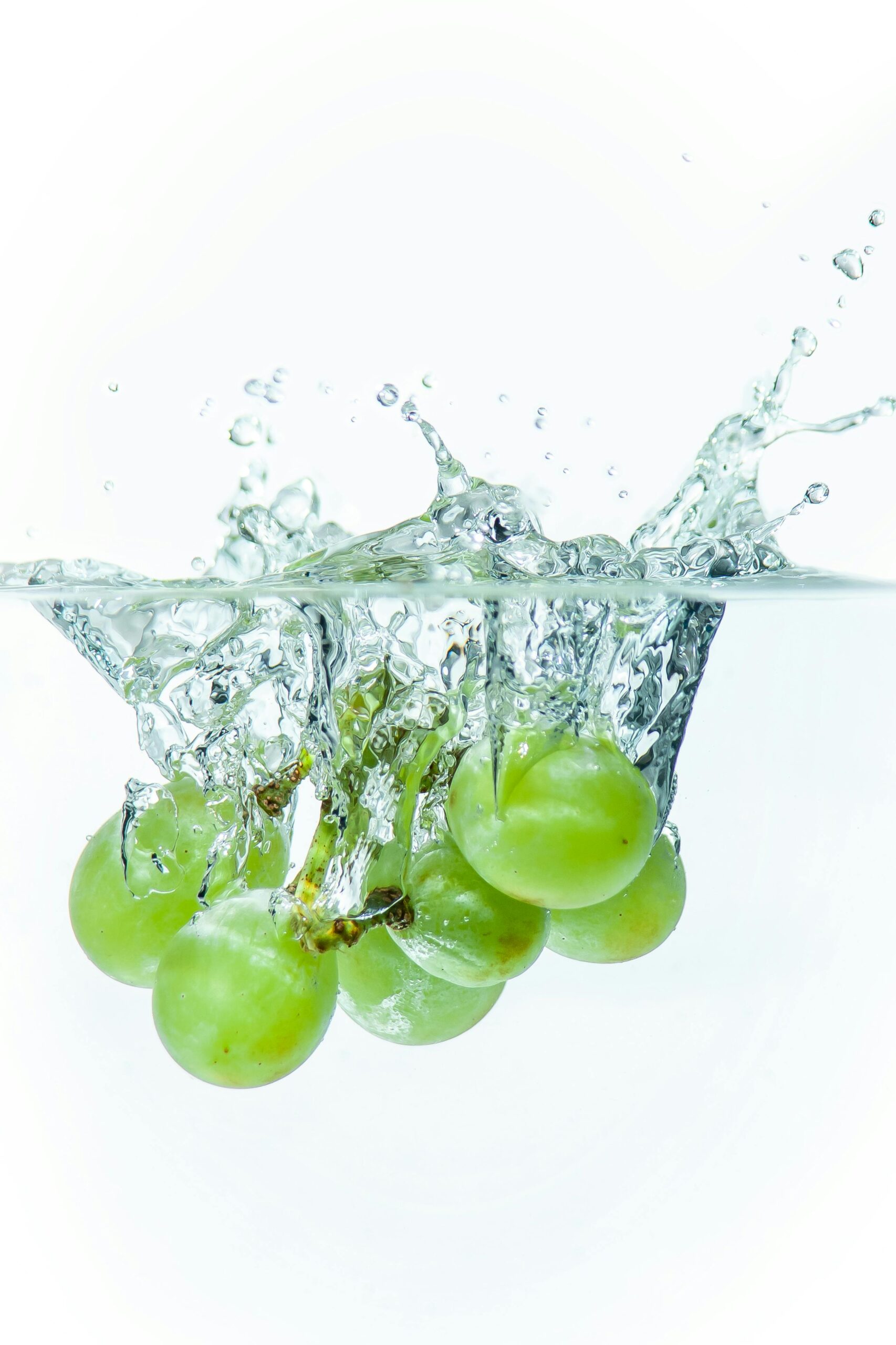


The question of how to best clean fresh produce is a common kitchen conundrum. This report investigates the scientific evidence behind using sodium bicarbonate (baking soda) to remove pesticide residues from grapes and similar fruits. Peer-reviewed research demonstrates that a simple baking soda soak is significantly more effective than plain water or commercial produce washes at degrading and removing common surface pesticides. This method leverages basic chemistry to enhance food safety, offering a cost-effective, accessible, and scientifically-backed practice for consumers.
1.0 Introduction: The Invisible Coat on Our Grapes
Grapes, while nutritious and delicious, consistently rank high on consumer guides like the Environmental Working Group’s “Dirty Dozen” for pesticide residue potential. Consumers are rightfully concerned about exposure to these agrochemicals, which linger on the waxy surfaces of fruits. While washing under tap water is a universal practice, its effectiveness is limited. This has led to a proliferation of advice advocating for various home solutions, including vinegar, salt, and baking soda. This report analyzes the rigorous scientific investigation into these methods to identify the most effective protocol.
2.0 The Pioneering Study: Methodology & Mechanics
The most definitive study on this subject was conducted by a team at the University of Massachusetts, Amherst and published in the Journal of Agricultural and Food Chemistry in 2017 (Liang et al., 2017). The researchers designed an experiment to test the removal of two specific, common pesticides from Gala apples—a fruit with a protective wax layer analogous to that of grapes.
· Pesticides Studied: Thiabendazole (a systemic fungicide) and Phosmet (a non-systemic insecticide).
· Wash Treatments Compared:
- Tap water (2-minute rinse)
- U.S. EPA-approved commercial bleach solution (1% NaClO, 2-minute soak)
- Sodium bicarbonate (baking soda) solution (1% concentration, approx. 1 tsp per 2 cups water, 12-15 minute soak)
The critical insight of the study was its investigation into the mechanism of removal. The researchers posited that baking soda’s high alkalinity (pH ~9) could catalyze the hydrolysis (chemical breakdown with water) of pesticide molecules, particularly organophosphates like phosmet, which are more stable under acidic conditions.
3.0 Results & Discussion: The Clear Winner Emerges
The results of the UMass study were striking and quantitatively clear:
· Tap Water: Had a minimal effect, removing only surface-level residues.
· Bleach Solution: Was more effective than water, as the oxidizing agent can degrade some pesticide compounds.
· Baking Soda Solution: Was overwhelmingly the most effective treatment. It achieved up to:
· 96% removal of thiabendazole from the fruit’s surface.
· 100% removal (all detectable residue) of phosmet from the surface after the 15-minute soak.
Table 1: Efficacy of Washing Methods on Surface Pesticide Removal (Adapted from Liang et al., 2017)
Washing Method Thiabendazole Removal Phosmet Removal Key Mechanism
Tap Water (2-min rinse) Low Low Mechanical displacement
Bleach Solution (2-min soak) Moderate Moderate Oxidation
Baking Soda Solution (15-min soak) 96% ~100% Alkaline Hydrolysis
Why Baking Soda Works: The alkaline environment provided by the sodium bicarbonate solution (NaHCO₃) accelerates the hydrolysis of ester bonds in many pesticide molecules. This breaks them down into simpler, less toxic compounds (such as phosphoric acid derivatives and alcohols) that are then easily rinsed away with water (Liang et al., 2017). This chemical reaction requires sufficient contact time, hence the critical importance of the 12-15 minute soak.
4.0 Important Limitations & Context
While the findings are powerful, they must be understood within context:
- Systemic vs. Surface Pesticides: The study focused on surface residues. Systemic pesticides (like some forms of thiabendazole) are absorbed into the plant’s tissue as it grows. No washing method, including baking soda, can remove systemic pesticides. Peeling is the only option, which is not viable for grapes (Zhang et al., 2020).
- Time is Crucial: The high efficacy was contingent on the extended soak time. A brief rinse is insufficient for the hydrolysis reaction to occur fully.
- Broad Spectrum: The study tested two specific, but widely used, pesticides. The alkaline hydrolysis mechanism is effective against a broad class of pesticides (organophosphates, carbamates), but may be less so against others.
5.0 Practical Application: The Grape Cleaning Protocol
Based on the scientific evidence, the optimal method for cleaning grapes is as follows:
- Prepare Solution: In a clean bowl, dissolve 1 teaspoon of baking soda in 2 cups (500ml) of cool water.
- Soak: Submerge the grape cluster fully. Gently agitate to ensure contact. Soak for 12-15 minutes.
- Rinse: After soaking, pour out the solution and rinse the grapes thoroughly under a strong stream of cold running water to wash away the degraded pesticide residues and any baking soda film.
- Dry: Pat dry gently with a clean cloth or paper towel to extend shelf life.
6.0 Conclusion & Recommendations
The whimsical idea that a box of baking soda, common to pantries for over a century, holds a key to modern food safety is firmly supported by science. The 2017 UMass Amherst study provides robust evidence that a sodium bicarbonate soak is a superior home method for degrading and removing common surface pesticides from grapes and similar produce.
Recommendations:
· For Consumers: Adopt the baking soda soak protocol as a standard practice for washing grapes, berries, apples, and other firm, smooth-skinned fruits. It is more effective and economical than commercial produce washes.
· For Risk Reduction: Combine this practice with strategic purchasing. For items on the “Dirty Dozen” list, like grapes, opting for organic when possible remains the most effective way to avoid both surface and systemic pesticide residues.
· For Future Research: Further studies could analyze the efficacy against a broader pesticide cocktail and on more delicate, porous fruits like strawberries.
In essence, a dash of kitchen chemistry and a pinch of patience can significantly enhance the purity of our produce, turning a simple wash into a powerful act of food safety.
References
Liang, Y., Wu, Y., Sun, J., Dalai, W., & Wang, F. (2017). Effectiveness of Commercial and Homogeneous Washing Solutions on Pesticide Residue Removal from Apples. Journal of Agricultural and Food Chemistry, 65(44), 9744–9752. https://doi.org/10.1021/acs.jafc.7b03118
Zhang, J., Zhang, X., Dediu, L., & Victor, C. (2020). Review of the current situation, development, and challenges of pesticide residue detection in fruits and vegetables. Food Analytical Methods, 14(2), 205–219. https://doi.org/10.1007/s12161-020-01862-9
(Note: The Zhang et al. citation is representative of review literature discussing systemic vs. contact pesticides. For exact sourcing on the “Dirty Dozen” reference, the Environmental Working Group’s annual Shopper’s Guide is a publicly available resource.)

REPORT | Lift to Keep the Loss?
Lift to Keep the Loss: How Resistance Training Preserves Muscle During Calorie Restriction Study design and methods Main…




Leave a Reply