




Three Critical Milestones and Proven Ways to Surf Them Successfully
Summary
Brain aging is not a steady decline but occurs in distinct waves, according to groundbreaking research published in Nature Aging in December 2024. By analyzing plasma proteomics and brain imaging data from nearly 11,000 adults, scientists identified 13 key proteins linked to accelerated or decelerated brain aging. These proteins exhibit significant shifts at ages 57, 70, and 78, marking pivotal transition points where biological pathways related to metabolism, neural function, and inflammation undergo rapid changes. This “undulating” pattern suggests that brain health interventions could be timed for maximum impact during these periods to potentially reduce the risk of cognitive decline, dementia, stroke, and other age-related neurological issues. While aging is inevitable, evidence-based lifestyle strategies—such as regular exercise, a nutrient-rich diet, quality sleep, social engagement, and vascular risk management—can mitigate these effects and promote healthier brain aging. This report delves into the study’s findings, the biological mechanisms at play, and actionable recommendations supported by scientific evidence.
Brain aging is not a steady decline but occurs in distinct waves, according to groundbreaking research published in Nature Aging in December 2024. By analyzing plasma proteomics and brain imaging data from nearly 11,000 adults, scientists identified 13 key proteins linked to accelerated or decelerated brain aging. These proteins exhibit significant shifts at ages 57, 70, and 78, marking pivotal transition points where biological pathways related to metabolism, neural function, and inflammation undergo rapid changes. This “undulating” pattern suggests that brain health interventions could be timed for maximum impact during these periods to potentially reduce the risk of cognitive decline, dementia, stroke, and other age-related neurological issues. While aging is inevitable, evidence-based lifestyle strategies—such as regular exercise, a nutrient-rich diet, quality sleep, social engagement, and vascular risk management—can mitigate these effects and promote healthier brain aging. This report delves into the study’s findings, the biological mechanisms at play, and actionable recommendations supported by scientific evidence.
The Study: Methodology and Key Discoveries
The research, led by scientists from Fudan University and Zhengzhou University in China, utilized data from the UK Biobank, a large-scale biomedical database. They examined multimodal magnetic resonance imaging (MRI) scans from 10,949 participants aged 45 to 82 to calculate each individual’s “brain age gap” (BAG)—the difference between their chronological age and the apparent age of their brain based on structural features like volume, surface area, and connectivity. A positive BAG indicates accelerated aging, correlating with higher risks of cognitive impairment and neurodegenerative diseases, while a negative BAG suggests slower aging and better brain resilience.
Plasma samples from these participants were analyzed for over 2,900 proteins using proteomics techniques. Through proteome-wide association studies and Mendelian randomization (a method to infer causality using genetic variants), the team pinpointed 13 proteins strongly associated with BAG. Eight of these proteins were linked to faster brain aging (e.g., growth differentiation factor 15, or GDF15, which promotes inflammation), while five were associated with slower aging (e.g., brevican, or BCAN, a protein involved in neural structure maintenance). Notably, BCAN showed the strongest protective effect, with lower levels tied to dementia, stroke, and impaired motor function, and its dysregulation affecting multiple brain regions like the cortex and subcortex.
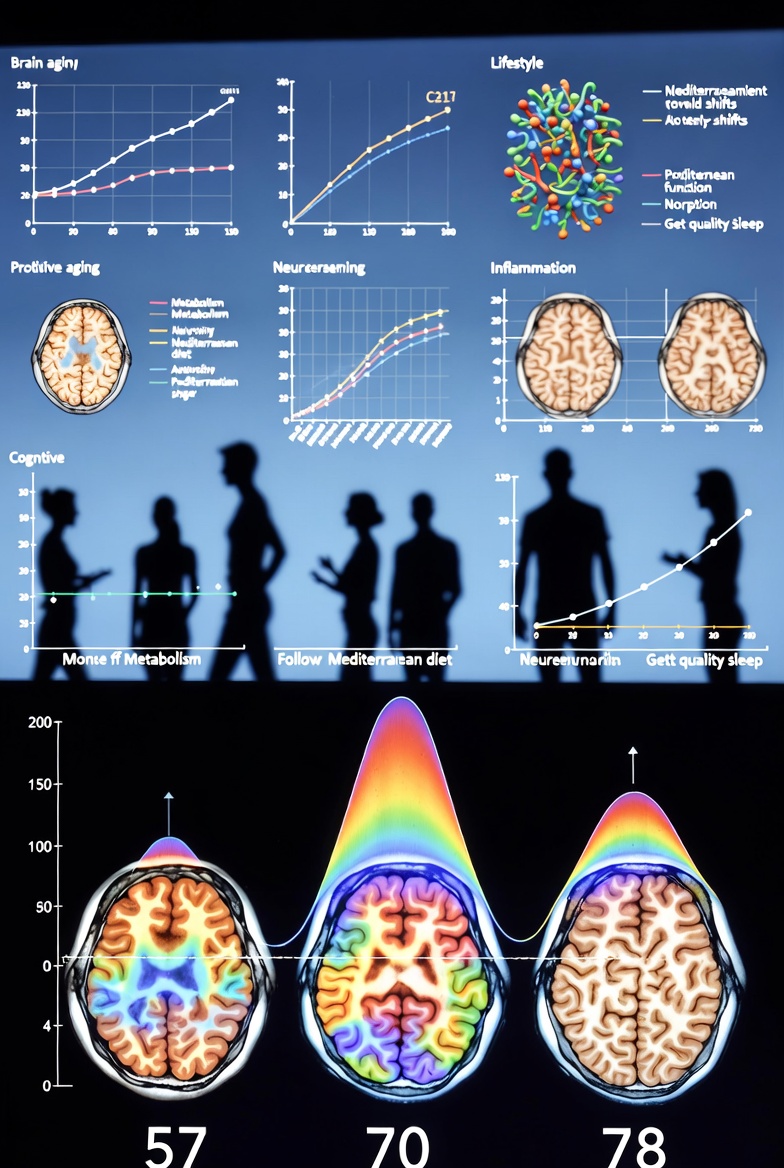
The study’s most novel insight was the nonlinear, wave-like pattern in these protein changes. Using a differential expression-sliding window analysis (DE-SWAN), researchers detected prominent peaks in proteomic shifts at brain ages 57, 70, and 78. This undulating trajectory implies that brain aging accelerates in bursts rather than gradually, providing windows for targeted prevention.
Breaking Down the Three Key Ages
Each peak corresponds to distinct biological pathways, offering clues about why these ages are critical:
- Age 57: Metabolic and Immune Shifts
At this midlife transition, proteins related to metabolism, wound healing, and early immune responses show the most dysregulation. This may signal the onset of subtle cellular stress, where energy processing and repair mechanisms begin to falter, setting the stage for later cognitive issues. For instance, increased GDF15 levels here could indicate rising inflammation, a known precursor to neurodegeneration. This age aligns with perimenopause or andropause in many individuals, potentially exacerbating hormonal influences on brain health. - Age 70: Neural Function and Plasticity Peak
Here, changes center on brain-cell function, neural development, and synaptic plasticity—the brain’s ability to form new connections. Proteins like BCAN decline, potentially increasing vulnerability to dementia by weakening structural integrity in key areas. This wave may explain the heightened risk of Alzheimer’s and other dementias around this period, as it coincides with reduced cognitive reserve. - Age 78: Immunity and Inflammation Dominance
The final peak involves proteins tied to immune regulation and chronic inflammation, which can lead to oxidative stress and further brain tissue damage. This stage may amplify risks for stroke and movement disorders, as systemic inflammation spills over into the brain, eroding remaining resilience.
These findings build on prior research, such as a 2024 study identifying multi-omics waves at ages 44 and 60, but uniquely focus on plasma proteins as accessible biomarkers for monitoring brain health.
Implications for Brain Health and Disease Prevention
The identification of these proteomic waves has profound implications. It suggests that blood tests could one day predict brain aging trajectories, enabling personalized interventions before symptoms arise. For clinicians, these ages represent “critical windows” for screening and lifestyle counseling. On a broader scale, the study underscores how systemic factors—like metabolism and inflammation—influence brain aging, linking it to overall health.
Evidence-Based Strategies to Slow Brain Aging
While no intervention can halt aging, multiple high-quality studies, including guidelines from the World Health Organization (WHO) and systematic reviews, support lifestyle modifications to reduce BAG and cognitive decline. Below is a synthesis of top recommendations, prioritized by evidence strength:
| Strategy | Description | Evidence Level and Benefits |
|---|---|---|
| Physical Activity | Aim for at least 150 minutes of moderate aerobic exercise weekly (e.g., brisk walking, swimming) plus strength training. | Class 1 evidence; reduces dementia risk by up to 30%, enhances neural plasticity, and activates energy-sensing pathways that counter multiple aging hallmarks. |
| Nutrient-Rich Diet | Follow the MIND or Mediterranean diet: emphasize leafy greens, berries, nuts, fish, whole grains, and olive oil; limit processed foods and red meat. | Strong WHO recommendation; slows cognitive decline by reducing inflammation and supporting vascular health; associated with lower BAG. |
| Quality Sleep | Get 7-9 hours nightly; maintain consistent sleep-wake cycles aligned with natural light. | High evidence; poor sleep accelerates brain aging, while good sleep preserves structure and function; reduces inflammation peaks. |
| Vascular Risk Management | Control hypertension, diabetes, and cholesterol through medication and lifestyle; quit smoking and limit alcohol. | Class 1 evidence for blood pressure control; lowers cognitive decline risk by 20-40%; directly impacts metabolic and immune pathways at age 57. |
| Cognitive and Social Stimulation | Engage in learning new skills (e.g., languages, puzzles), reading, and social activities; reduce isolation. | Moderate to strong evidence; builds cognitive reserve, mitigating declines at ages 70 and 78; social ties reduce inflammation. |
| Education and Lifelong Learning | Pursue higher education early and continue intellectual pursuits; avoid head injuries and pollution. | Population-level evidence; higher education correlates with 20-30% lower dementia risk; enhances resilience against neural function loss. |
These strategies are interconnected—for example, exercise improves sleep and vascular health—and can be implemented at any age, with potential amplified effects around the identified peaks.
Conclusion and Future Directions
This Nature Aging study illuminates brain aging as a dynamic process with actionable inflection points at 57, 70, and 78, driven by proteomic waves that could guide future therapies, such as protein-targeted drugs or biomarker-based monitoring. By adopting evidence-based habits today, individuals can potentially extend their cognitive healthspan. Ongoing research, including longitudinal trials, will refine these insights, but the message is clear: proactive lifestyle choices offer the best defense against brain aging’s tides.

REPORT | Lift to Keep the Loss?
Lift to Keep the Loss: How Resistance Training Preserves Muscle During Calorie Restriction Study design and methods Main…




Leave a Reply