

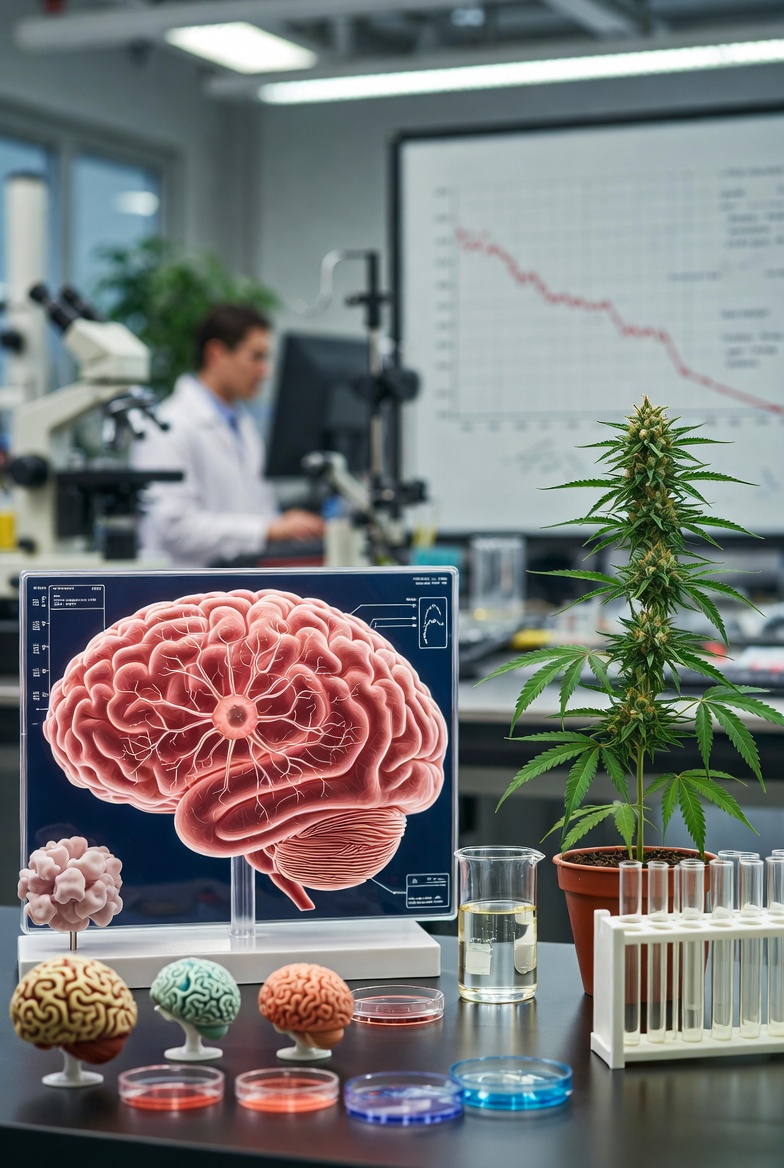



Cannabis sativa and its derivatives, particularly cannabinoids like cannabidiol (CBD) and delta-9-tetrahydrocannabinol (THC), have garnered significant attention for their potential neuroprotective properties. Extensive research, including preclinical studies, animal models, and emerging human data, suggests that these compounds can mitigate neuronal damage through multiple mechanisms such as antioxidation, anti-inflammation, and modulation of neurotransmitter systems. This report synthesizes key findings from scientific literature up to early 2026, highlighting benefits in conditions like Alzheimer’s disease (AD), Parkinson’s disease (PD), epilepsy, traumatic brain injury (TBI), and age-related cognitive decline. However, it also addresses the dual profile of cannabinoids, where high doses or chronic use may pose neurotoxic risks, emphasizing the need for balanced, evidence-based perspectives.
Introduction to Cannabinoids and Neuroprotection
The endocannabinoid system (ECS) plays a crucial role in maintaining brain homeostasis, regulating processes like neuroinflammation, excitotoxicity, and oxidative stress—key contributors to neurodegeneration. Cannabinoids from cannabis interact with ECS receptors (CB1 and CB2), offering therapeutic potential. CBD, a non-psychoactive compound, and THC, the primary psychoactive one, have been studied extensively for their ability to protect neurons without the intoxicating effects dominating at low doses. Reviews underscore that cannabinoids can block neurodegeneration progression across various diseases by targeting multiple pathways.
Mechanisms of Action
Cannabinoids exert neuroprotective effects through several interconnected mechanisms:
- Antioxidant Properties: CBD and THC act as potent antioxidants, scavenging reactive oxygen species (ROS) and reducing oxidative stress, a hallmark of neurodegenerative disorders. In vitro studies show they protect neurons from glutamate-induced toxicity, outperforming traditional antioxidants like ascorbate. A 2022 Salk Institute study revealed that cannabinol (CBN) preserves mitochondrial function in aging neurons, countering cell death in models of AD.
- Anti-Inflammatory Effects: By modulating microglial activation and cytokine release, cannabinoids dampen neuroinflammation. CBD inhibits NF-κB and p38 MAPK pathways, reducing inducible nitric oxide synthase (iNOS) expression. Terpenes and flavonoids in cannabis enhance these effects, potentially via entourage synergies.
- Anti-Excitotoxic and Neurogenic Roles: Cannabinoids normalize glutamatergic and GABAergic imbalances, preventing excitotoxicity. They may promote neurogenesis in the hippocampus, aiding recovery from insults like ischemia. In oxygen-glucose deprivation models mimicking stroke, phytocannabinoids like cannabigerorcinic acid (CBGOA) improved neuronal survival.
- Receptor-Mediated Protection: Activation of CB1/CB2 receptors influences synaptic plasticity and immune responses. CBD’s interaction with PPARγ and A2A receptors further supports anti-inflammatory neuroprotection.
Evidence from Preclinical Studies
Preclinical research provides robust evidence for cannabis’s neuroprotective benefits:
- Alzheimer’s Disease: In AD models, cannabinoids reduce amyloid-β aggregation, tau hyperphosphorylation, and neuroinflammation. CBD and THC combinations improved cognition and reduced hippocampal neuronal loss. Low-dose THC promoted synaptic connections and neurogenesis in aging brains. A 2023 review highlighted CBD’s role in preventing oxidative stress and microglial activation.
- Parkinson’s Disease: Phytocannabinoids like CBD protected dopaminergic neurons in PD rodent models via anti-oxidative and anti-apoptotic mechanisms. Cannabigerol (CBG) showed promise in Huntington’s-like models by preserving striatal neurons.
- Epilepsy: CBD’s anticonvulsant effects stem from reducing neurotoxicity and inflammation. A 2024 review noted CBD’s modulation of ECS for seizure control and neuroprotection in drug-resistant epilepsy.
- Traumatic Brain Injury and Stroke: CBD administered pre- or post-injury normalized signaling imbalances in TBI models. In stroke simulations, multiple phytocannabinoids mitigated ischemia-reperfusion injury.
- Retinal Neurodegeneration: Cannabinoids reduced oxidative stress in models of glaucoma and diabetic retinopathy, preserving retinal cells via CB1/CB2 activation.
Animal studies using Caenorhabditis elegans further confirmed neuroprotective effects of cannabis oils, improving movement and reducing acetylcholinesterase activity in Alzheimer’s-like strains.
Human and Observational Evidence
While preclinical data is promising, human studies are limited but encouraging:
- A 2025 University of Colorado study of over 1,000 adults linked moderate cannabis use to larger brain volumes in key regions and better cognitive performance, suggesting protection against age-related decline. However, heavy use was associated with reduced activation during working memory tasks.
- Epidemiological data indicate lower dementia risk among older cannabis users, with reduced cognitive decline over time. Clinical trials for epilepsy (e.g., Epidiolex) confirm CBD’s neuroprotective role in reducing seizures.
- In schizophrenia models, CBD improved cognition, countering THC’s potential risks.
Potential Risks and Dual Effects
Cannabinoids exhibit a dual profile: neuroprotective at low doses but potentially neurotoxic at high ones. Chronic heavy use may impair memory, attention, and executive function, especially in adolescents, whose developing brains are vulnerable. Long-term effects include risks of addiction, reduced IQ, and mental health issues like anxiety or psychosis. A 2023 APA review noted that while some cognitive deficits may not be permanent, early onset use heightens risks.
Conclusion
The body of evidence supports cannabis’s neuroprotective benefits, particularly through CBD and low-dose THC, offering hope for treating neurodegenerative diseases. However, dose, timing, and individual factors are critical to avoid adverse effects. Large-scale clinical trials are essential to translate preclinical promise into therapeutic applications. As of February 2026, ongoing research continues to refine our understanding, advocating for cautious, informed use.
References
- The dual neuroprotective–neurotoxic profile of cannabinoid drugs – PMC – NIH
- Active ingredient in cannabis protects aging brain cells – Salk Institute
- Assessing the neuroprotective benefits of Cannabis sativa in epilepsy management
- The Neurotherapeutic Arsenal in Cannabis sativa – MDPI
- The Neuroprotective Effects of Cannabis-Derived Phytocannabinoids and Resveratrol in Parkinson’s Disease – PMC
- Multilayered neuroprotection by cannabinoids in neurodegenerative diseases
- Review of the neurological benefits of phytocannabinoids
- Neuroprotection by Cannabinoids in Neurodegenerative Diseases – OAText
- Cannabidiol and (−)Δ9-tetrahydrocannabinol are neuroprotective antioxidants | PNAS
- The Neuroprotective Effects of Cannabis – Sensi Seeds
- Exploring the neuroprotective effects of phytocannabinoids on oxygen-glucose deprived neurons
- Evaluating Cannabis sativa L.’s neuroprotection potential
- Neuroprotective Effect of Cannabidiol Against Hydrogen Peroxide
- Cannabis effects on brain structure, function, and cognition – PMC
- Cannabidiol for neurodegenerative disorders – Frontiers
- New research suggests low-dose cannabis could be the key to reversing brain aging
- Elucidating the Neuroinflammatory and Neuroprotective Activity of Phytochemicals in Cannabis sativa
- Neuroprotective Role of Cannabinoids in Retinal Disease – MDPI
- Review of the neurological benefits of phytocannabinoids – PMC
- Assessing the neuroprotective benefits of Cannabis sativa in epilepsy management
- Multilayered neuroprotection by cannabinoids in neurodegenerative diseases
- Cannabidiol’s neuroprotective properties and potential treatment of traumatic brain injuries
- The Neurotherapeutic Arsenal in Cannabis sativa – PMC
- Neuroprotective Role of Cannabinoids in Retinal Disease – MDPI
- The dual neuroprotective–neurotoxic profile of cannabinoid drugs – PMC
- Neuroprotective potential of Cannabis sativa-based oils in Caenorhabditis elegans | Scientific Reports
- Cannabis and Brain Health – CDC
- How does marijuana affect the brain? Psychological researchers examine impact on different age groups over time
- Cannabis (Marijuana) | National Institute on Drug Abuse (NIDA) – NIH
- Largest Study Ever Done on Cannabis and Brain Function Finds Impact on Working Memory
- Weeding Out the Truth: Cannabis, Cognition, and Dementia – Penn Memory Center
- Health effects of cannabis – Canada.ca
- Brain Function Outcomes of Recent and Lifetime Cannabis Use | JAMA Network Open
- The Effects, Risks and Side Effects of Marijuana (Weed, Cannabis, THC) | SAMHSA
- Use of Marijuana: Effect on Brain Health: A Scientific Statement From the American Heart Association | Stroke
Leave a Reply