

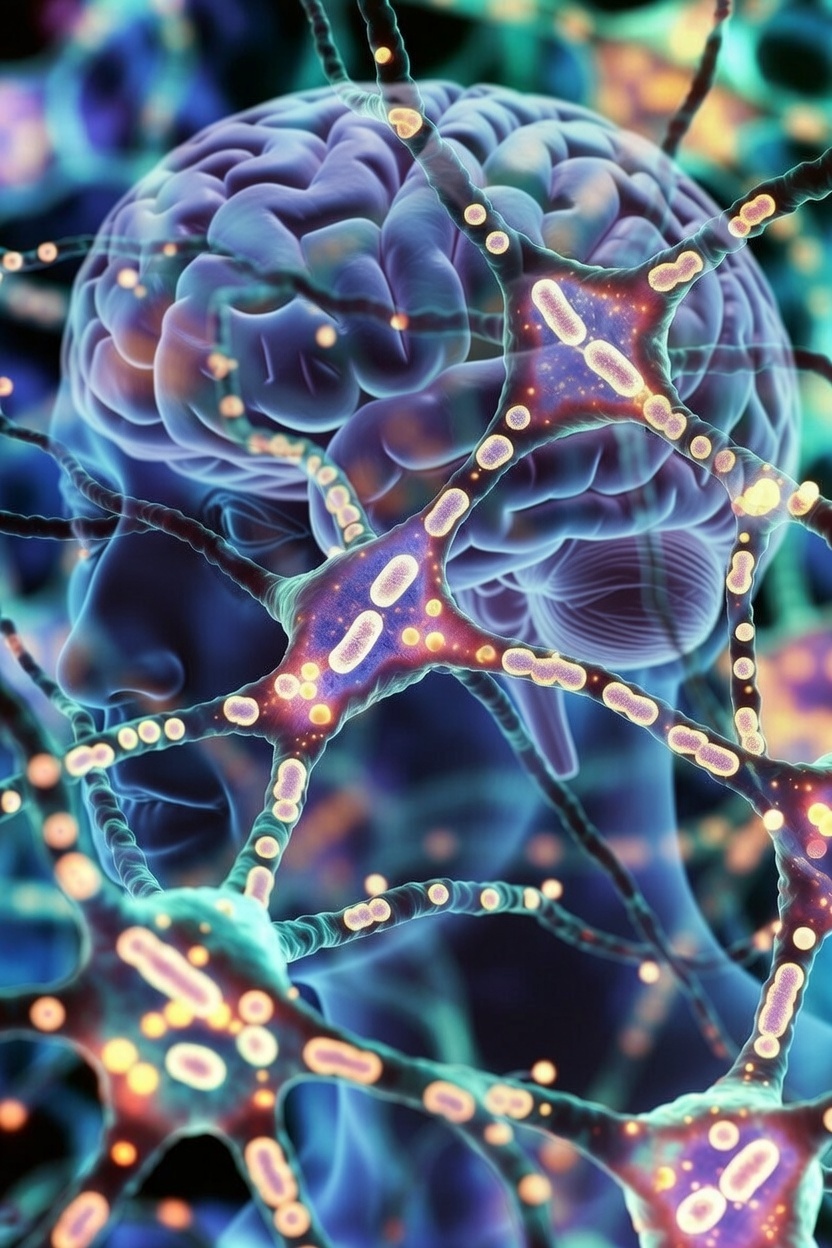



The long-standing view in neuroscience held that neurons primarily — if not exclusively — rely on glucose for energy, with ketone bodies serving as an alternative during periods of glucose scarcity (such as fasting). Fatty acids were generally considered unsuitable for direct neuronal metabolism due to risks like oxidative stress, slower ATP production compared to glucose, and the observation that healthy neurons rarely accumulate visible lipid droplets. Astrocytes were thought to handle most fatty acid oxidation, producing ketones or other metabolites for neurons to use.Recent groundbreaking studies, particularly from 2025, have overturned this dogma. Evidence now shows that neurons can directly metabolize fatty acids through β-oxidation in their mitochondria, drawing from intracellular lipid droplets (tiny intracellular fat storage organelles containing triglycerides). This process provides a significant portion of neuronal energy — up to around 20% in some contexts — especially during high synaptic activity, glucose limitation, or specific cognitive demands like memory formation.
Key Mechanisms: Lipid Droplets and DDHD2
Lipid droplets serve as dynamic energy reserves in neurons. Triglycerides stored within them are broken down by enzymes like DDHD2 (a neuron-specific triglyceride lipase) into free fatty acids (such as myristic, palmitic, and stearic acids). These fatty acids are transported into mitochondria via carnitine palmitoyltransferase (CPT1/CPT2), where β-oxidation generates ATP.Synaptic electrical activity triggers this breakdown, ensuring rapid local energy supply at nerve terminals. In the absence of DDHD2 (as modeled in knockout mice or hereditary spastic paraplegia type 54 patients), lipid droplets accumulate, mitochondrial respiration declines, ATP levels drop by about 20%, and synaptic vesicle recycling slows. Remarkably, supplementing neurons with fatty acyl-CoAs (e.g., a mix of myristoyl-, palmitoyl-, and stearoyl-CoA) restores ATP and function within 48 hours, without causing oxidative damage.This continuous turnover explains why lipid droplets are scarce in healthy brains — they are rapidly used rather than stored.
Landmark Studies from 2025
- A July 2025 study in Nature Metabolism (led by Timothy A. Ryan at Weill Cornell Medicine) demonstrated that synaptic activity drives lipid droplet catabolism for ATP production. Blocking DDHD2 or fatty acid import into mitochondria caused rapid torpor in mice and impaired synaptic function. In glucose-deprived conditions, neurons still used fatty acids from droplets to sustain activity.
- A September 2025 Nature Metabolism paper (collaborative work involving University of Queensland and University of Helsinki researchers) focused on DDHD2’s role in generating saturated fatty acids for β-oxidation. In DDHD2-deficient neurons, energy deficits were reversed by fatty acid supplementation, highlighting potential therapies for related disorders.
- A May 2025 bioRxiv preprint (later published) showed synaptic mitochondria preferentially oxidize fatty acids (e.g., palmitate or octanoate), boosting respiration, ATP, and presynaptic activity. Inhibiting β-oxidation reduced these benefits.
- In December 2025, another Nature Metabolism study using Drosophila melanogaster (fruit flies) revealed that neuronal fatty acid β-oxidation is essential for memory formation after intensive learning. Glia deliver lipids to neurons, which oxidize them to power mushroom body function — directly challenging the idea that neurons avoid fat metabolism in healthy adults.
- NIH-supported research in August 2025 confirmed neurons tap lipid droplets under low glucose, with constant triglyceride turnover preventing accumulation.
These findings build on earlier estimates that fatty acid oxidation could account for up to 20% of brain energy metabolism, previously attributed mostly to glia.
Implications for Health, Disease, and Therapy
This discovery reframes brain energy metabolism as more versatile. Glucose remains primary, but fatty acids provide resilience during stress, high demand, or pathology.For hereditary spastic paraplegia 54 (caused by DDHD2 mutations), fatty acid supplementation emerges as a promising, rapid-acting therapy to restore neuronal energy and function.Broader applications include neurodegenerative diseases like Alzheimer’s (where lipid dysregulation contributes), epilepsy, or conditions with energy deficits. It may refine ketogenic diets by emphasizing specific fatty acids for neuronal benefit.However, balance is key: excessive or dysregulated fatty acid oxidation could increase reactive oxygen species and mitotoxicity in some contexts.
Conclusion
These 2025 studies mark a paradigm shift: neurons are not glucose-obligate but can actively use fats as fuel, especially via lipid droplet dynamics and β-oxidation. This versatility supports synaptic resilience, cognitive processes like memory, and opens therapeutic doors for brain disorders once thought intractable.
References
- Ryan lab / Weill Cornell Medicine (2025). “Triglycerides are an important fuel reserve for synapse function in the brain.” Nature Metabolism. https://www.nature.com/articles/s42255-025-01321-x
- DDHD2 study (2025). “DDHD2 provides a flux of saturated fatty acids for neuronal energy and function.” Nature Metabolism. https://www.nature.com/articles/s42255-025-01367-x
- Pavlowsky et al. (2025). “Neuronal fatty acid oxidation fuels memory after intensive learning in Drosophila.” Nature Metabolism. https://www.nature.com/articles/s42255-025-01416-5
- NIH Research Matters (2025). “Neurons can tap into fat for fuel.” https://www.nih.gov/news-events/nih-research-matters/neurons-can-tap-into-fat-fuel
- ALZFORUM (2025). “Fueled by Fat: Lipid Droplets a Critical Energy Source for Synapses.” https://www.alzforum.org/news/research-news/fueled-fat-lipid-droplets-critical-energy-source-synapses
- bioRxiv preprint (2025). “Mitochondria at synapse utilize fatty acids as a bioenergetic fuel source.” https://www.biorxiv.org/content/10.1101/2025.05.26.656116v1
(As of February 2026, no major contradicting studies have emerged; research continues to explore in vivo implications and human relevance.)

REPORT | Lift to Keep the Loss?
Lift to Keep the Loss: How Resistance Training Preserves Muscle During Calorie Restriction Study design and methods Main…




Leave a Reply