




Unlocking the Mystery of Long COVID: The Role of Microclots and Neutrophil Extracellular Traps
Long COVID, a condition that affects a significant number of individuals surviving COVID-19, has continued to puzzle researchers and clinicians alike. Recent findings published in the Journal of Medical Virology shed light on the possible mechanisms underlying this debilitating condition. The study reveals that long COVID may be driven by microscopic microclots reinforced by sticky immune structures known as neutrophil extracellular traps (NETs). This report delves into the key discoveries of this groundbreaking research and their implications for future treatments.
Understanding Microclots and NETs
Microclots are small fibrin-enriched structures that can obstruct blood flow. In patients with long COVID, researchers found that these microclots are nearly twenty-fold more prevalent than in healthy individuals. The study also discovered that NETs, which consist of web-like meshes produced by neutrophils, contribute to the persistence of these clots. By forming physical barriers in small blood vessels, they can limit the delivery of oxygen to vital organs and tissues, leading to continued symptoms in long COVID patients.
The Study’s Findings
Elevated Levels of Microclots
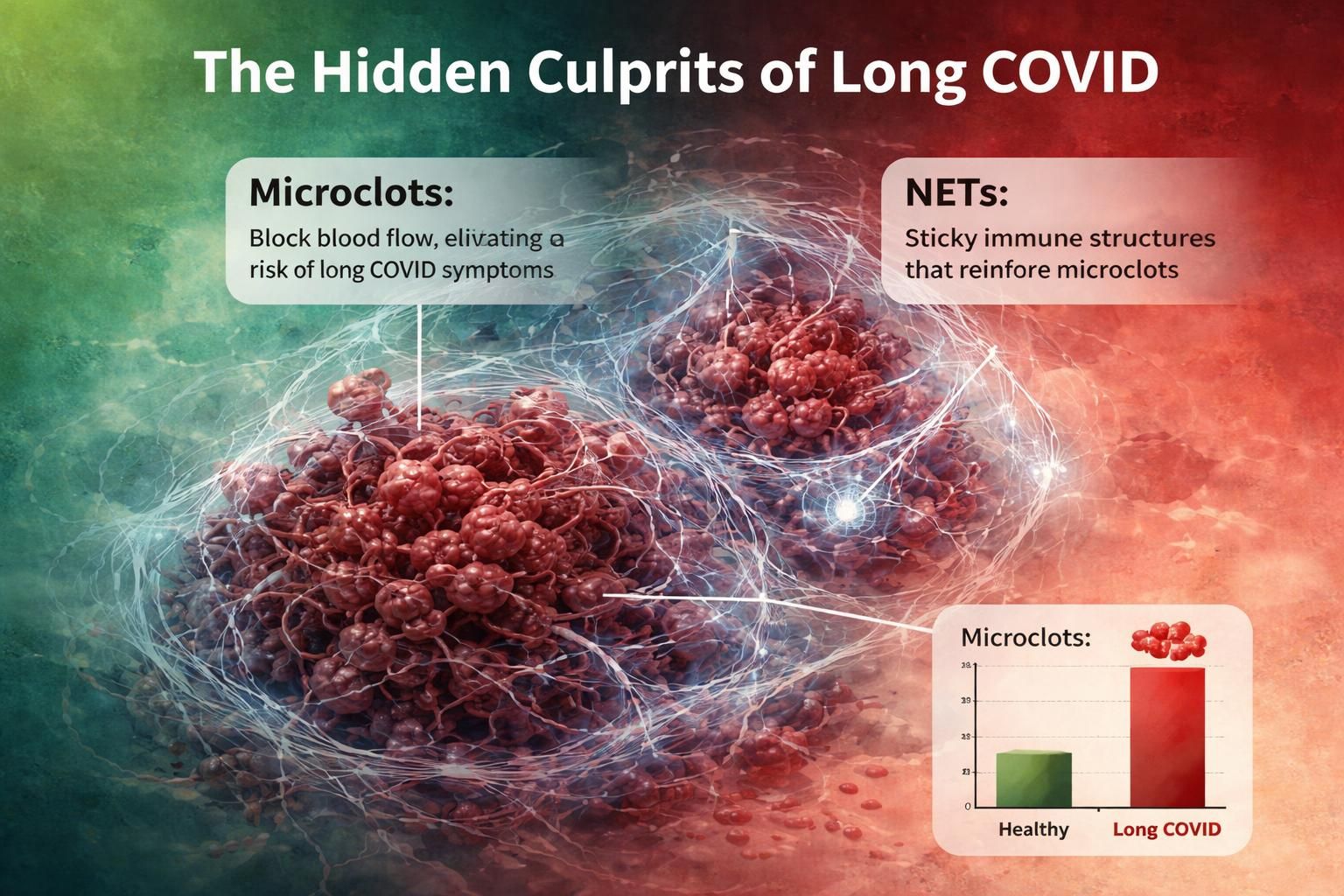
The study quantitatively measured microclots and NETs in long COVID patients. It concluded that the combination of these structures results in a thromboinflammatory state, distinct from other post-viral syndromes. This state is characterized by both clotting abnormalities and persistent inflammation, which may be crucial in the ongoing struggles faced by these individuals.
AI-Driven Diagnostics
One of the breakthrough elements of the study was the application of artificial intelligence (AI) in identifying long COVID samples. The 91% accuracy achieved demonstrates the potential for AI to transform diagnostic processes. By analyzing the unique blood patterns of long COVID patients, AI systems can effectively differentiate these cases from healthy controls, making the diagnostic procedure both scalable and precise.
Implications for Treatment
The insights gained from this study suggest a pivotal change in the way long COVID is approached. Instead of exclusively managing symptoms, the data points toward future treatments focused on dismantling the microclots and NETs that contribute to persistent health issues. This therapeutic direction could lead to interventions that target the underlying biological disturbances rather than just alleviating symptoms.
The research published in the Journal of Medical Virology marks a significant step forward in our understanding of long COVID. As researchers define the mechanisms behind this condition more clearly, the path to developing targeted therapies becomes increasingly feasible. By addressing the role of microclots and neutrophil extracellular traps, we may soon uncover effective treatments that could alleviate the suffering of countless long COVID patients.
References
- Journal of Medical Virology. (2025). Circulating Microclots Are Structurally Associated With Neutrophil Extracellular Traps and Their Amounts Are Elevated in Long COVID Patients.
This emerging field of research holds promise, but continued studies and clinical trials will be essential to validate these findings and translate them into actionable treatments for long COVID patients.
Leave a Reply