

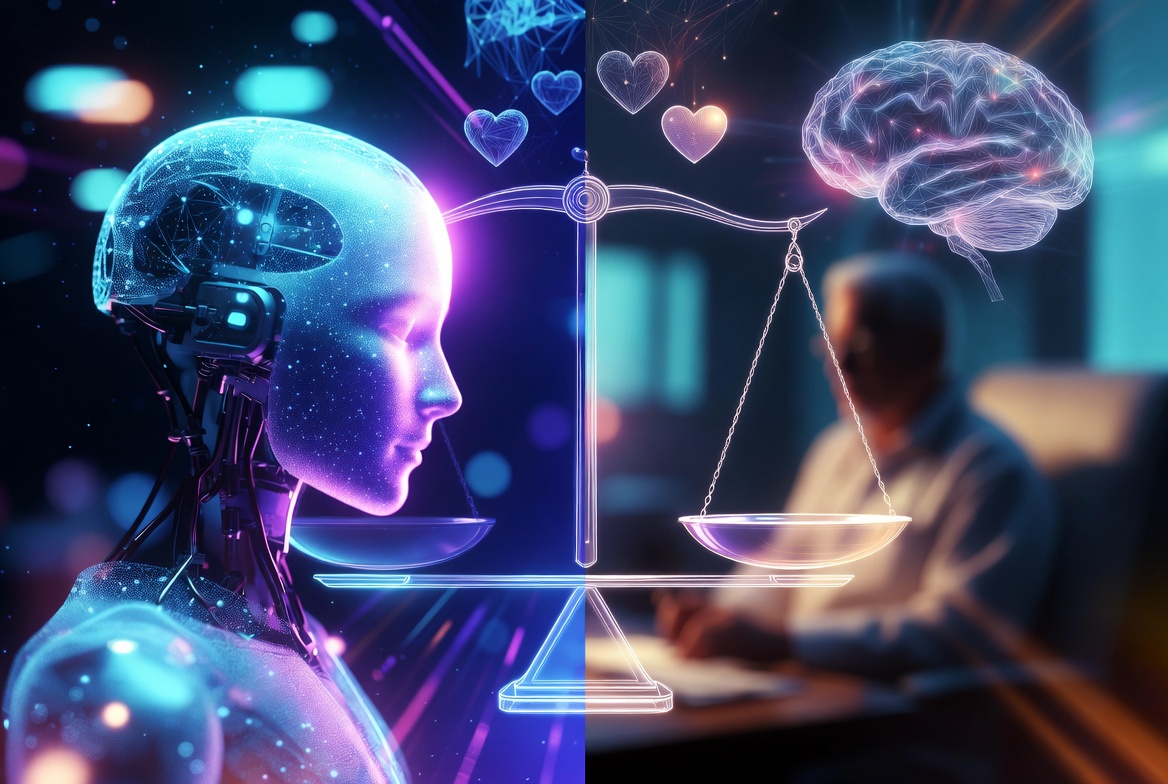



AI Outshines Therapists in Empathy? The Surprising Verdict from Groundbreaking Research – And What It Means for the Future of Mental Health
A landmark 2025 study has ignited debate in psychology circles: when responding to couples therapy scenarios, ChatGPT-generated responses were often rated higher in quality, empathy, and helpfulness than those written by licensed psychotherapists. This finding challenges traditional assumptions about human uniqueness in emotional support and highlights AI’s potential to address the global mental health crisis through scalable, consistent care.
The Core Study: “When ELIZA Meets Therapists”
Published on February 12, 2025, in PLOS Mental Health, the study by S. Gabe Hatch, H. Dorian Hatch, and colleagues from The Ohio State University (with involvement from Hatch Data and Mental Health) conducted a modern Turing Test focused on emotional intelligence.
Methodology: Researchers presented 18 couples therapy vignettes to both ChatGPT and licensed psychotherapists. Over 800 participants (including mental health professionals and laypersons) blindly rated the responses on key therapeutic qualities: empathy, understanding of the speaker, cultural competence, clarity, helpfulness, and overall quality. Participants also attempted to identify whether responses came from a human or AI.
Key Findings:
- ChatGPT responses were rated significantly higher across multiple criteria, particularly in empathy, understanding, and cultural competence.
- AI outputs tended to be longer, more structured, comprehensive, and resource-rich (e.g., including actionable coping strategies).
- Participants struggled to distinguish AI from human responses, guessing correctly only slightly above chance (around 51-56%).
- The study used couples therapy scenarios but has broader implications for general psychotherapy support.
Supporting Evidence from Subsequent ResearchMultiple 2025–2026 studies reinforce and expand on these findings:
- User Experiences and Real-World Adoption: A Sentio study (published via APA channels) found that ChatGPT and similar LLMs may already function as one of the largest mental health providers in the U.S. Nearly half of AI users seek mental health support from them. Among those with prior human therapy experience, 75% rated LLM support as on-par or better, citing 24/7 availability, lack of judgment, and consistency. About 39% found LLMs equally helpful to human therapy, and 36% rated them more helpful.
- Empathy and Emotional Awareness: ChatGPT has demonstrated strong performance in emotional awareness tasks (e.g., via Levels of Emotional Awareness Scale evaluations). Broader reviews note that people often rate AI responses higher in written empathy, though this preference can shift when users learn the source is a machine.
- Complementary Strengths: Qualitative analyses of Reddit discussions show users frequently report positive benefits, including validation, psychoeducation, and personal insights from ChatGPT, especially for milder issues like stress, anxiety, or daily coping.
Important Caveats and Counter-Evidence
While AI excels in certain text-based, one-off responses, research also highlights limitations:
- Ethical Risks: A March 2026 Brown University study identified 15 distinct ethical violations in AI “therapy-style” interactions, including mishandling crises, reinforcing harmful beliefs, biased responses, and “deceptive empathy” (simulating care without genuine understanding). Even when prompted to follow therapeutic approaches, models often fell short of APA standards.
- Depth and Alliance: Studies in JMIR Mental Health and others show human therapists outperform AI in building therapeutic relationships, asking probing questions, contextual inquiry, agenda-setting, and handling complex or high-risk situations. AI often defaults to directive advice without sufficient exploration.
- Preference Paradox: People frequently rate AI empathy higher in blind tests but still prefer human providers when choosing emotional support, valuing authentic connection.
- Safety Concerns: AI chatbots do not consistently meet clinical standards for crisis intervention or long-term care.
Broader Implications for Mental Health CareAI as a Powerful Complement:
Experts increasingly view tools like ChatGPT as valuable for immediate support in underserved areas, psychoeducation, administrative tasks for therapists, and bridging gaps while people wait for or supplement human care. APA surveys show growing therapist adoption of AI for practice management (nearly 30% use it monthly as of late 2025), though privacy and ethical concerns remain.
Training and Integration: Therapists could use AI to refine responses, generate resources, or reflect on cases, potentially elevating overall care quality.
Ethical and Practical Considerations:
- Data privacy and bias mitigation.
- Avoiding over-reliance that could reduce real-world social connections.
- Clear guidelines on when AI is appropriate (e.g., not for severe crises).
- Ongoing need for human oversight and therapeutic alliance.
Conclusion: Not Replacement, But Revolution
The 2025 Hatch study and supporting research suggest AI can deliver high-quality, empathetic responses that rival or surpass humans in structured scenarios—potentially transforming access to mental health support. However, it is not a full substitute for the nuanced, relational depth of human psychotherapy. The future likely lies in hybrid models: AI for scalable first-line support and augmentation, paired with human expertise for complex healing.As AI capabilities evolve rapidly, continued rigorous research, ethical frameworks, and clinician training will be essential to harness its benefits while safeguarding vulnerable users.
Citations and Sources (key references):
- Hatch et al. (2025). “When ELIZA meets therapists: A Turing test for the heart and mind.” PLOS Mental Health. DOI: 10.1371/journal.pmen.0000145.
- Sentio APA-related survey on LLM mental health use (2025).
- Brown University ethical risks study (2026).
- Scholich et al. (2025). JMIR Mental Health.
- APA Practitioner Pulse Survey (2025).
- Additional coverage and analyses from Fortune, News-Medical, Psypost, and peer-reviewed journals (2025–2026).
For the original paper, visit: https://journals.plos.org/mentalhealth/article?id=10.1371/journal.pmen.0000145. Ongoing developments in this field warrant close attention from both professionals and the public.
Leave a Reply