




The Cheap Dopamine Trap: How Instant Gratification Is Hijacking Your Brain—and Why Effort Delivers the Real Reward
Do you engage in too many of these?
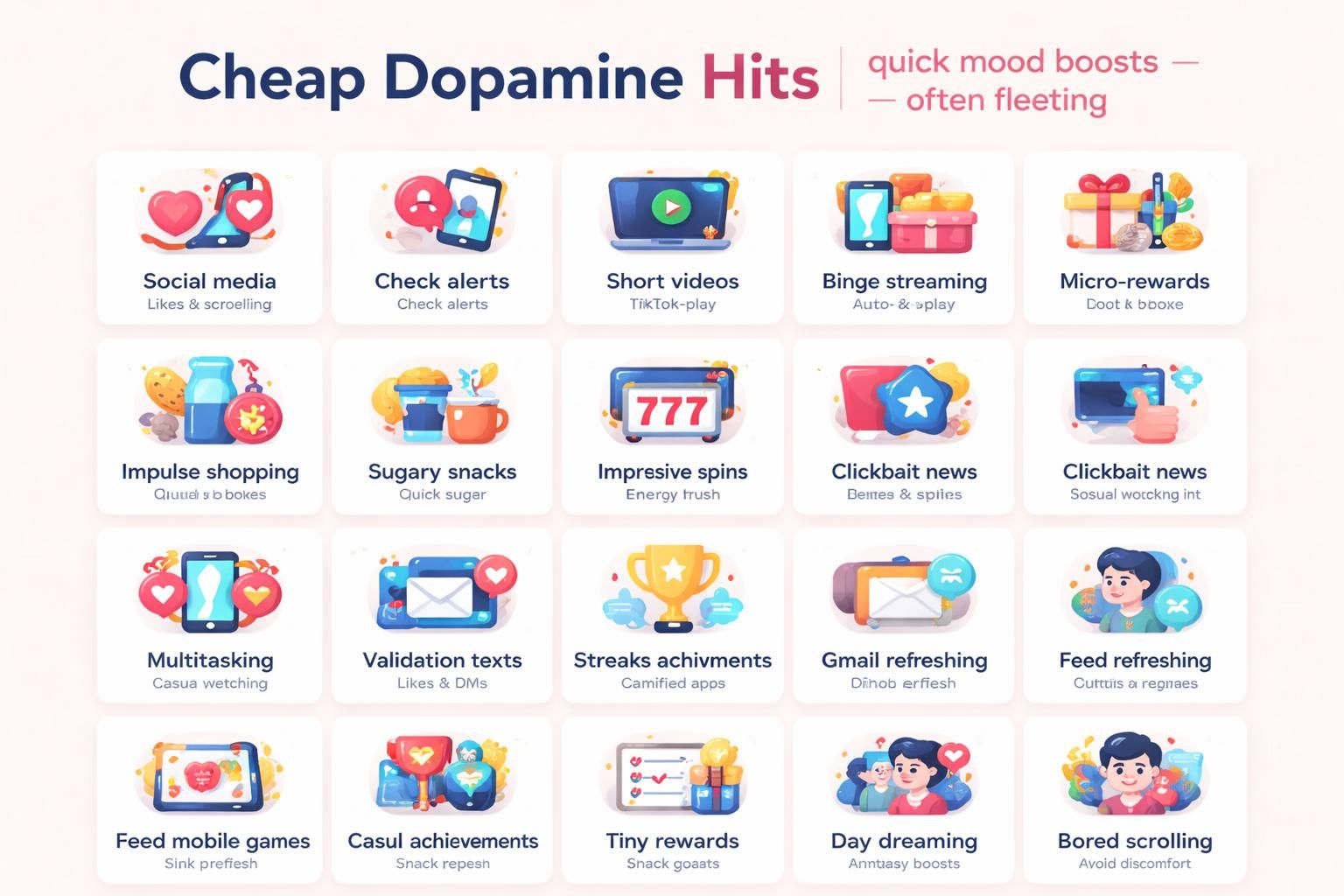
“cheap dopamine examples,” “activities that give quick dopamine,”
– Push-notification checking
– Watching short-form videos (TikTok/Reels)
– Bingeing TV shows or streaming auto-play
– Video game micro-rewards / loot boxes
– Online shopping / impulse buying
– Snacking on sugary or highly processed foods
– Caffeine spikes (energy drinks, shots)
– Gambling / betting (including fantasy sports)
– Porn or casual sex apps
– Excessive novelty-seeking (news, clickbait)
– Constant multitasking / switching tabs
– Seeking validation via texts/messages
– Overuse of apps with streaks/achievements
– Compulsive email checking
– Refreshing feeds for updates
– Instant messaging games (e.g., Candy Crush)
– Ruminating on fantasies or daydreams for quick mood boosts
– Overusing easily attainable goals (setting tiny rewards repeatedly)
– Habitual scrolling while bored (to avoid discomfort)
In today’s hyper-stimulated world, our brains are bombarded with quick, effortless hits of pleasure from endless scrolling, notifications, junk food, and binge-watching. These “cheap dopamine” sources deliver fast spikes in the brain’s reward chemical but often leave us feeling drained, unmotivated, and less able to enjoy everyday life. In contrast, “hard” or natural dopamine—earned through effortful activities like exercise, deep conversations, creative work, or time in nature—builds longer-lasting satisfaction, sharper focus, and mental resilience. This distinction isn’t just wellness jargon; it reflects core principles of how the brain’s reward system adapts (or maladapts) to modern environments.
What Is Cheap Dopamine?
Cheap dopamine refers to rapid, low-effort rewards from highly accessible stimuli engineered for maximum stimulation with minimal investment. Examples include doomscrolling on social media (with its unpredictable likes and notifications), ultra-processed snacks, video games, online shopping, or constant phone checks. These trigger quick dopamine surges in the brain’s mesolimbic pathway, creating an immediate “wanting” or motivational pull. The problem? Repeated exposure leads to desensitization or downregulation. The brain reduces dopamine receptor sensitivity to maintain balance, so you need stronger or more frequent stimuli to feel the same buzz. Over time, this can cause mental fatigue, reduced motivation for non-digital tasks, poorer focus, and even symptoms resembling anhedonia (inability to feel pleasure from normal activities). As one expert notes, modern society immerses us in “a sea of available rewards… meant to keep us over-engaged,” turning natural survival mechanisms into compulsive loops. Research links excessive stimulation from social media, gaming, and junk food to reward system dysregulation, contributing to impulsivity, attention issues, and addiction-like behaviors. Evolutionarily, dopamine evolved for uncertain, effortful rewards in ancestral environments—not the supernormal stimuli of today.
The Power of Hard (or Natural) Dopamine
On the flip side, hard dopamine arises from activities requiring sustained effort, delay, or investment. Think: a tough workout, mastering a skill, meaningful social connection, cooking a meal from scratch, or hiking in nature. These don’t always deliver an instant spike but produce more sustained feelings of accomplishment, motivation, and well-being. Why the difference? Dopamine isn’t just about pleasure (“liking”); it’s primarily a signal for motivation, anticipation, learning, and salience—the drive to pursue goals. Effort amplifies dopamine responses to rewards. Studies show that the more effort required for a reward, the greater the dopamine release, making achievements feel deeper and more satisfying. This helps explain why “earned” rewards build long-term drive rather than tolerance. Dopamine also plays a key role in effort-based decision-making: it influences how we weigh costs versus benefits, invigorating action when rewards are worth the work. In motivational control, certain dopamine neurons encode value and promote persistence, while others handle salience for focus and preparation.
The Neurological Principle at Work
At its core, this distinction highlights homeostatic adaptation in the reward system. Chronic overstimulation from cheap sources raises the dopamine “set point” temporarily, then downregulates receptors—leaving baseline motivation lower. Effortful behaviors, by contrast, engage the system in a more balanced way: they often involve anticipation, learning, and incremental progress, reinforcing neural pathways for resilience rather than rapid habituation. Dopamine interacts with other systems (e.g., prefrontal cortex for cognitive effort, nucleus accumbens for reward processing). Cognitive or physical effort can even enhance perceived reward intensity in some contexts, though chronic easy rewards blunt this.
Evidence and Real-World Impacts
- Overstimulation harms: Excessive digital and processed stimuli correlate with desensitization, anxiety, depression-like states, and reduced ability to enjoy simple pleasures.
- Effort pays off: Activities requiring perseverance (exercise, goal pursuit) restore sensitivity, improve mood, focus, and long-term motivation. Research on dopamine and effort shows it invigorates behavior when high rewards justify costs.
- Mental health ripple effects: Cheap dopamine cycles contribute to procrastination, lower productivity, and weaker resilience. Shifting to hard sources can reduce impulsivity and enhance everyday satisfaction.
Practical Strategies (and Why “Dopamine Detox” Needs Nuance)
The popular “dopamine detox” or fasting trend—abstaining from high-stimulation activities—has merit as a behavioral reset but is often misunderstood. You can’t literally “fast” from a natural neurotransmitter; dopamine doesn’t deplete like a battery. The real benefit comes from breaking compulsive habits and replacing them with intentional ones, not extreme deprivation. Start small: Limit notifications and scrolling windows; swap junk food for home-cooked meals; schedule effortful hobbies or exercise; prioritize sleep and nature time. Replace with soothing alternatives (walks, reading, in-person chats). Benefits include better impulse control, focus, and appreciation for slower rewards—backed by anecdotal and emerging evidence, though more rigorous studies are needed.
Criticisms and Limitations
Not all experts endorse the “cheap vs. hard” framing as strict neuroscience—dopamine is chemically identical regardless of source; the difference lies in behavioral outcomes and adaptation. Extreme detoxes risk isolation or unnecessary restriction without proven superiority over balanced habits like mindfulness or CBT. Individual factors (genetics, conditions like ADHD) matter, and dopamine never acts in isolation.
Conclusion: Reclaim Your Reward System
The cheap dopamine epidemic explains why so many feel perpetually unsatisfied despite constant stimulation: our ancient brains aren’t built for infinite easy hits. By intentionally choosing effortful, meaningful pursuits, we can restore sensitivity, boost motivation, and cultivate deeper fulfillment. It’s not about eliminating pleasure—it’s about sourcing it sustainably. In a world designed to hijack your attention, the most rebellious act may be putting in the work for rewards that actually last. Small shifts today can rewire your brain for resilience tomorrow.
Leave a Reply